




How much sleep do you actually need?

Getting enough sleep is so essential to your health that the American Heart Association (AHA) recently added Sleep to its list of essential components for heart and brain health.(Life's Essential 8 | American Heart Association)
But how much sleep do we really need?
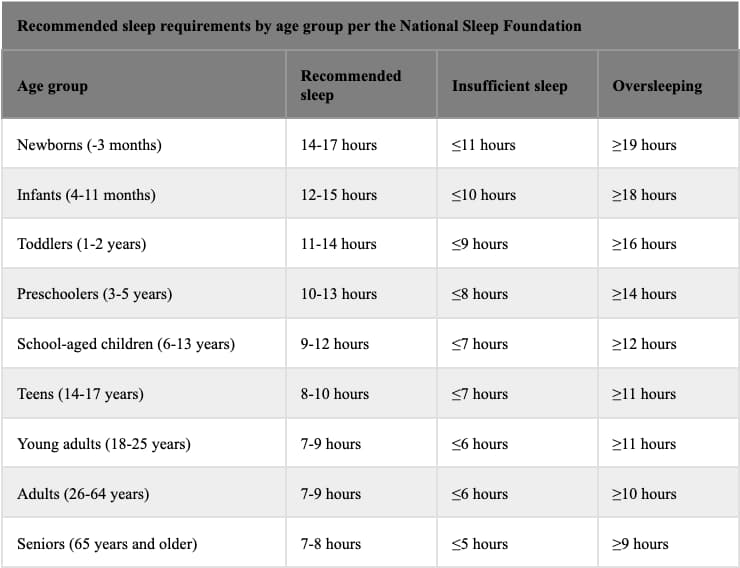
We all know people who swear they need their 9 hours of sleep, or they will not be able to function. Conversely, we all have that friend who seems to be able to get things done with 4-5 hours of sleep every night. So how much sleep is enough sleep?
The National Sleep Foundation has done the research, and these are their recommendations for duration of sleep based on age.
What happens if we don’t sleep enough?
We have all felt the effects of lack of sleep after one night - we are irritable, our mind is foggy, we start craving more bad foods. A few more days of poor sleep and our complexion gets duller, our immune system is weakened. Long term sleep deprivation can lead to mental health and physical illnesses and such as obesity, diabetes, high blood pressure, coronary artery disease or stroke.
What causes poor sleep?
- Age – As we age, our natural circadian body clock changes and can make it more difficult for us to get deep restorative sleep
- Sleep disorders – Having obstructive sleep apnea, restless leg syndrome or Insomnia
- Illnesses – Depression, anxiety and pain can make it difficult to sleep. Chronic lung, heart, kidney or urological disease can also give rise to symptoms that disrupt your sleep
- Others - Poor sleep habits, changes in our sleep environment or schedule
How can I get better sleep?
- Bright light exposure in the day - Go outdoors for 45-60mins of day light exposure over the course of the day
- Physical activity – Moving your body and getting your blood pumping helps regulate your natural sleep-wake cycle if done before midday
- Consistent sleep schedule – Going to bed and waking up at the same time every day will help set your internal body clock to recognize when it is time for sleep, and you will be able to fall asleep more quickly
- Conducive sleep environment – Create a positive sleep association with the bedroom by keeping it only for sleep and not work. When it is time for sleep, keep the room cool and block out external noises
- Turn off screens – Artificial light from our phones, computers and TVs suppresses melatonin. Try listening to music or a podcast or reading a book before bed instead
- Others - Avoid heavy meals, caffeine and alcohol before bed
When to see a doctor?
If you are unable to sleep properly despite changing your sleep habits and environment, or are constantly waking up feeling unrefreshed and tired throughout the day, do see your doctor for assessment of underlying sleep disorders or illness that may be affecting your rest.
References
National Sleep Foundation’s sleep time duration recommendations: methodology and results summary. Hirshkowitz, Max et al. Sleep Health: Journal of the National Sleep Foundation, Volume 1, Issue 1, 40 - 43


